Lesson 12 · Brew better
Espresso and filter are different systems
The same coffee can become a concentrated pressurised shot or a larger gravity-fed brew. Ratios cannot be copied between them.
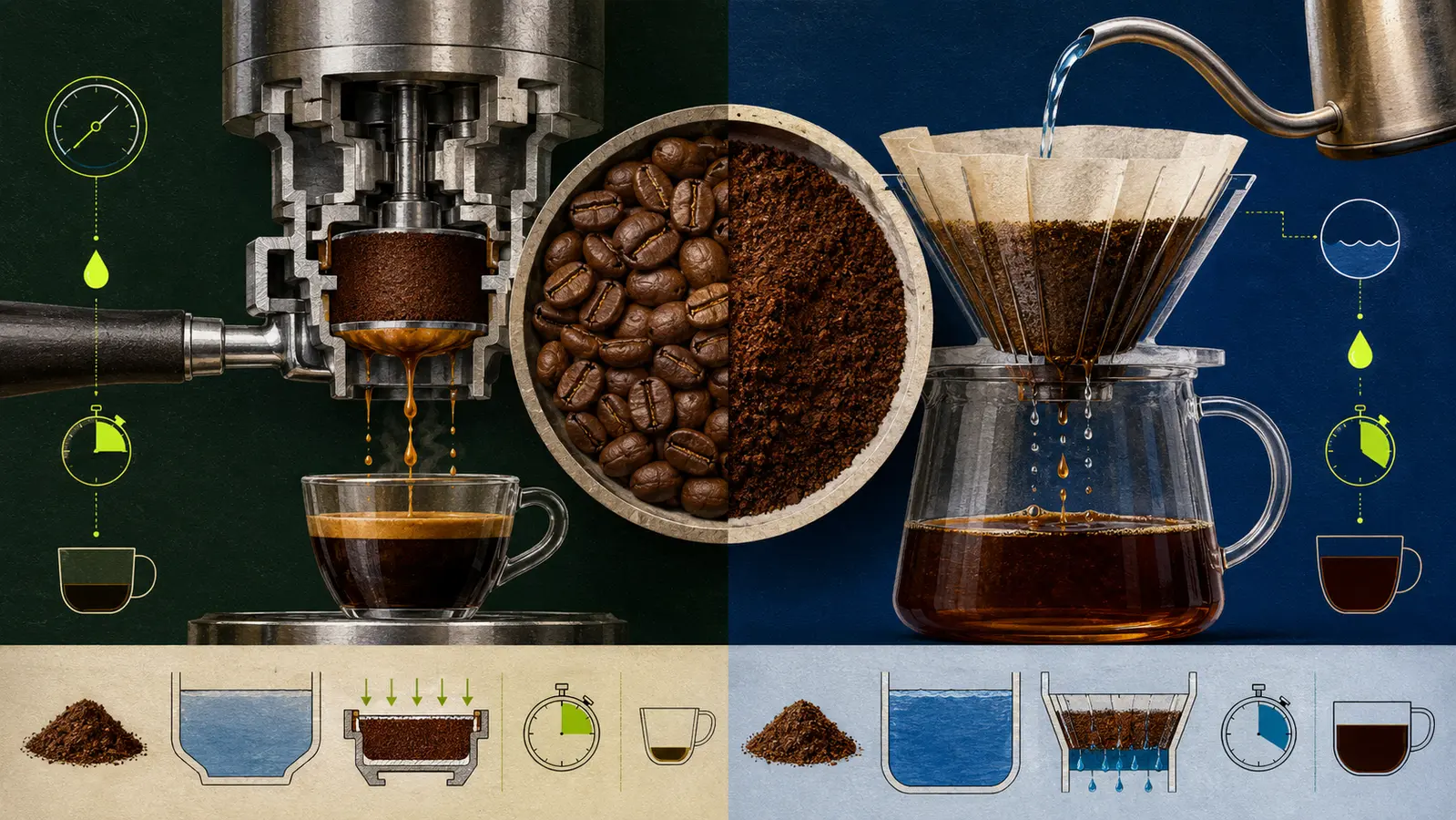
The measurements describe different things
A filter recipe such as 1:16 usually means one gram of dry coffee to sixteen grams of water poured. Some water stays in the grounds, so the beverage weighs less. An espresso such as 1:2 usually means one gram of dry coffee to two grams of liquid espresso in the cup.
That difference is why 18 grams of coffee can pair with roughly 288 grams of filter water but yield around 36 grams of espresso. Copying the number without the measurement system creates nonsense.
Pressure and the coffee bed change the task
Espresso pushes hot water through a compact fine-ground puck under pressure. Small changes in grind distribution, puck preparation and dose can change flow quickly. The result is concentrated, with oils and suspended material contributing texture.
Pour-over and batch filter rely mainly on gravity through a deeper, looser bed and a paper or metal filter. Contact time is longer, the beverage is less concentrated and flavour separation can be easier to perceive. methods sit in another family again.
Choose by experience, then dial in
Espresso can present intensity, texture and a compact view of the roast. Filter can stretch the same coffee into a longer, clearer drink. Milk changes the decision because concentrated espresso remains perceptible at smaller volumes.
Judge each method on its own terms. Record dose, water or yield, time and taste. If a café lists a coffee for both espresso and filter, ask whether the roast and recipes are the same. A skilled answer is more valuable than a fashionable label.
Next · lesson 13
How to taste coffee without pretending
Preference is real evidence when it is described clearly.
Next lesson