Lesson 07 · From origin to roast
Washed, natural and honey, without the myths
Process changes the route from fruit to seed; it does not prescribe one flavour.
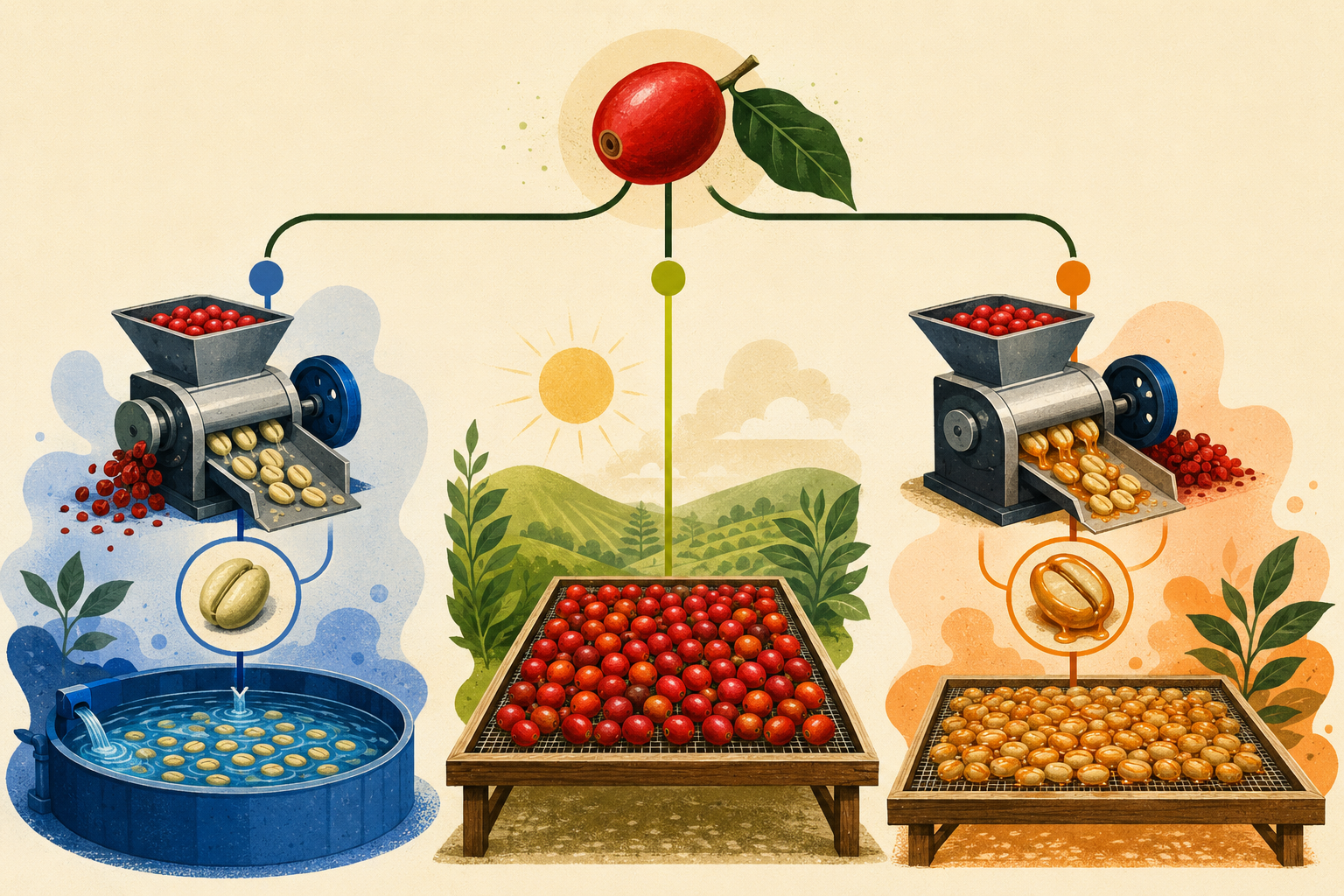
Washed process
In a common washed workflow, harvested cherries are sorted and depulped. Remaining is broken down through or removed mechanically, then the is washed and dried. The water use, equipment and fermentation approach vary widely.
are often described as clean or transparent, but those words are outcomes, not automatic properties. Poor sorting, uncontrolled fermentation or uneven drying can create defects in any process.
Natural process
dries inside the intact fruit. Producers spread cherries on patios or raised beds, turn them regularly and protect them from rain, excessive heat and uneven fermentation. Once the fruit is dry, a dry mill removes it from the seed.
Naturals may express intense fruit and fuller texture, but careful naturals can also be elegant. “Fruity” does not excuse ferment, mould or overripe flavours. The quality of raw material and drying management is decisive.
Honey and pulped natural
These approaches remove the skin and some pulp before drying while leaving a chosen amount of mucilage. Terms such as yellow, red or black can refer to local practices and drying conditions; they are not a universal global scale. Ask what the producer actually did.
Because the seed dries with exposed mucilage, turning, bed depth, shade and weather management remain important. The result can range from delicate to syrupy.
What experimental labels leave out
means oxygen was limited; it does not identify the entire process. , selected yeast, thermal shock and co-fermentation can all describe distinct interventions, but useful disclosure includes the state of the cherry, vessel, temperature, duration and what happened next.
Some coffees include fruit or other material during fermentation. That should be disclosed clearly because a drinker may otherwise assume every flavour arose from the coffee alone. Atlas preserves the producer or roaster’s wording and avoids upgrading vague claims into technical certainty.
Next · lesson 08
What roasting changes inside coffee
Roasting is controlled transformation: heat, time and airflow turn a dense green seed into a fragile aromatic material.
Next lesson