Lesson 10 · Brew better
Ratio, strength and extraction are different
A stronger cup is not automatically a better-extracted cup.
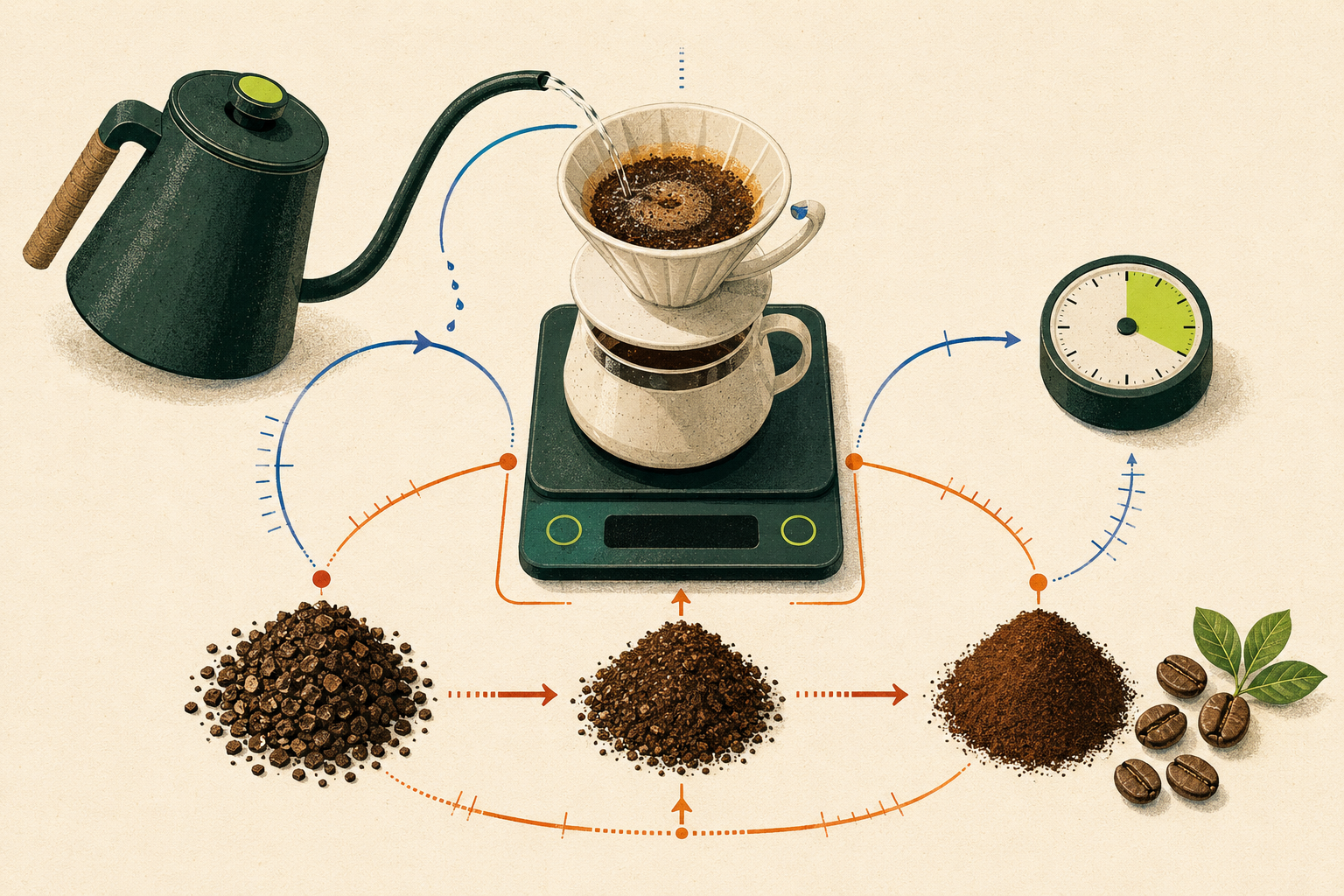
Ratio creates a repeatable starting point
A 1:16 filter means one gram of dry coffee for sixteen grams of brew water. With 300 grams of water, that is 18.75 grams of coffee. Recording both masses is clearer than saying “two scoops” or “one mug.”
Different methods use different practical ranges because their mechanics and intended beverage differ. Espresso ratios describe beverage mass, not water poured into the machine. Cold brew can be prepared as ready-to-drink coffee or as a concentrate. Atlas labels the method and the measurement so the number has meaning.
Strength is what reaches your palate first
is the concentration of dissolved coffee in the beverage. More coffee relative to water usually makes a stronger drink, although retained water and method change the final yield. A refractometer can measure total dissolved solids; most home brewers simply compare perceived intensity.
If a cup tastes pleasant but too light, a stronger ratio may help. If it is sour, bitter or drying, the problem may be rather than strength. Adding coffee can hide the symptom while making the recipe more expensive.
Extraction describes what left the grounds
Water dissolves acids, sugars, aroma compounds and bitter material at different rates and under different conditions. Grind size, particle distribution, temperature, contact time, , water chemistry and evenness all affect extraction.
Under-extracted coffee can taste sharp, hollow or salty; over-extracted or uneven coffee can taste drying, harsh or muddled. These are diagnostic patterns, not absolute laws. Darker roasts, unusual processing and personal sensitivity can complicate the picture.
A controlled dial-in loop
First keep coffee dose and water fixed. Observe whether the brew ran much faster or slower than your baseline. If it was sour and fast, grind finer. If it was drying and slow, grind coarser. Brew again before changing temperature, agitation and ratio as well.
Record the result in My Coffee Lab. The goal is not to discover one eternal recipe; it is to know which deliberate change improved this coffee with your grinder, water and method.
Next · lesson 11
Why brewing water changes the cup
Coffee is mostly water, but clean taste is only the beginning: minerals and alkalinity change extraction and perceived acidity.
Next lesson