Atlas Library · Competition recipes
Five AeroPress competition recipes worth brewing at home
World champions do not follow one magic formula. They change dose, temperature, agitation, filtration and dilution to suit one coffee. Here is how five winning recipes work, what they teach and how to brew them without a competition bench.
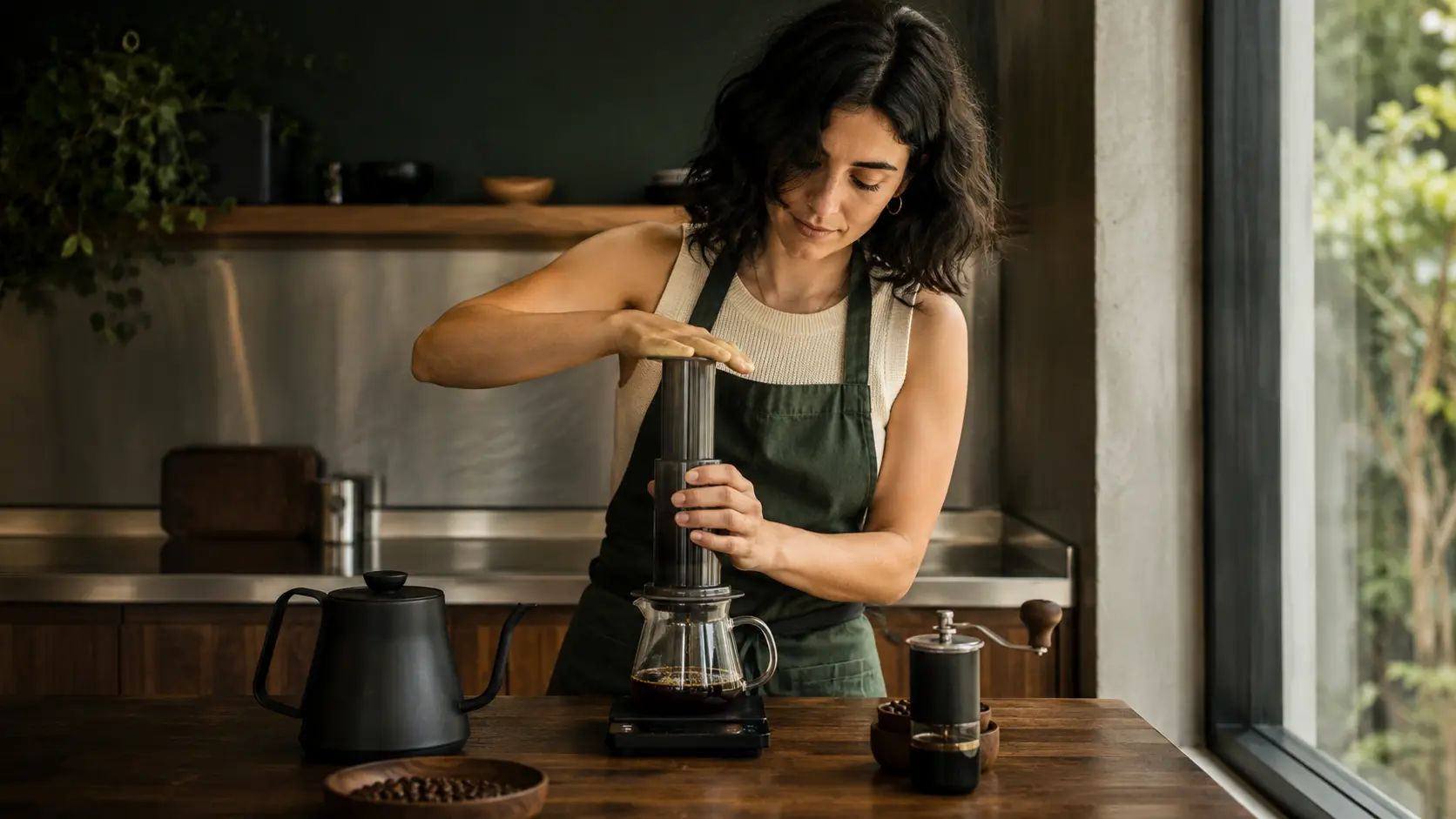
Competition recipes are experiments, not commandments
An AeroPress championship recipe can look a little wild when you first read it. One winner sifts out fine particles, uses two filters and prepares separate brewing and dilution water. Another uses an ordinary paper filter, one steady pour and a short press. Some brew a compact concentrate and dilute it. Others put nearly all the water through the coffee.
That variation is the lesson. Competitors receive a particular coffee and build a recipe for that coffee, the available water, the judging format and the flavours they want in the cup. A winning recipe proves that it worked on one important day. It does not become a law for every bag you buy.
The five recipes below come from official World AeroPress Championship records. Brew one faithfully if you have the equipment. Then borrow the idea behind it instead of copying numbers forever.
Before you begin
You need an AeroPress, a sturdy cup or server, paper filters, a grinder, a scale and a timer. A thermometer helps, but a temperature-controlled kettle is not essential. If your kettle has no display, let freshly boiled water rest with the lid open and check it with a kitchen thermometer.
Start with fresh drinking water that tastes clean on its own. Grinder clicks are not universal, so use the written texture as your starting point and let taste guide the next change.
- Weigh 18g coffee, then grind it medium-coarse for the first recipe.
- Rinse the paper filter and assemble the brewer over a strong server.
- Keep your scale and timer visible before the first pour.
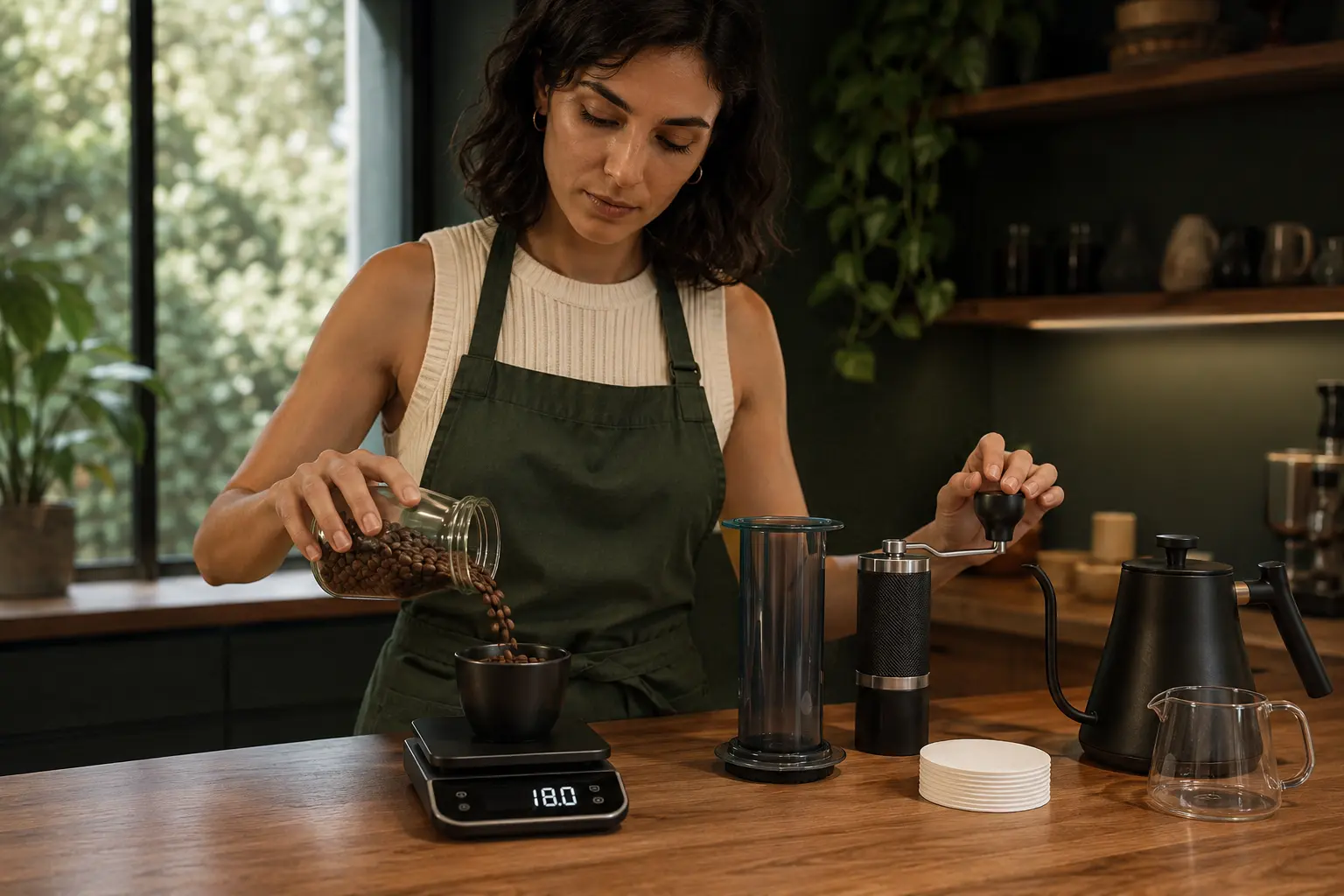
1. Némo Pop's 2025 world-winning short concentrate
Némo Pop of Australia won the 2025 championship with a washed Sidra from Finca la Carolina in Ecuador. He used an upright AeroPress with a Flow Control cap, two paper filters and 18g coffee. The used 100g water at 84°C, while 70g of 50°C water waited in the server.
Put 70g of 50°C water in the server. Add the coffee, then pour 100g brewing water and wet every ground. At 0:25, stir in a controlled cross pattern. At 0:50, begin a gentle 20-second press. Swirl and serve.
This is a fast, concentrated extraction with a cooler final cup. The waiting water immediately adjusts and temperature. If you do not own a Flow Control cap, use the inverted method so the brewing water does not run through early.
- Coffee: 18g, medium-coarse
- Brewing water: 100g at 84°C
- Bypass water: 70g at 50°C
- Stir at 0:25, press from 0:50 to 1:10
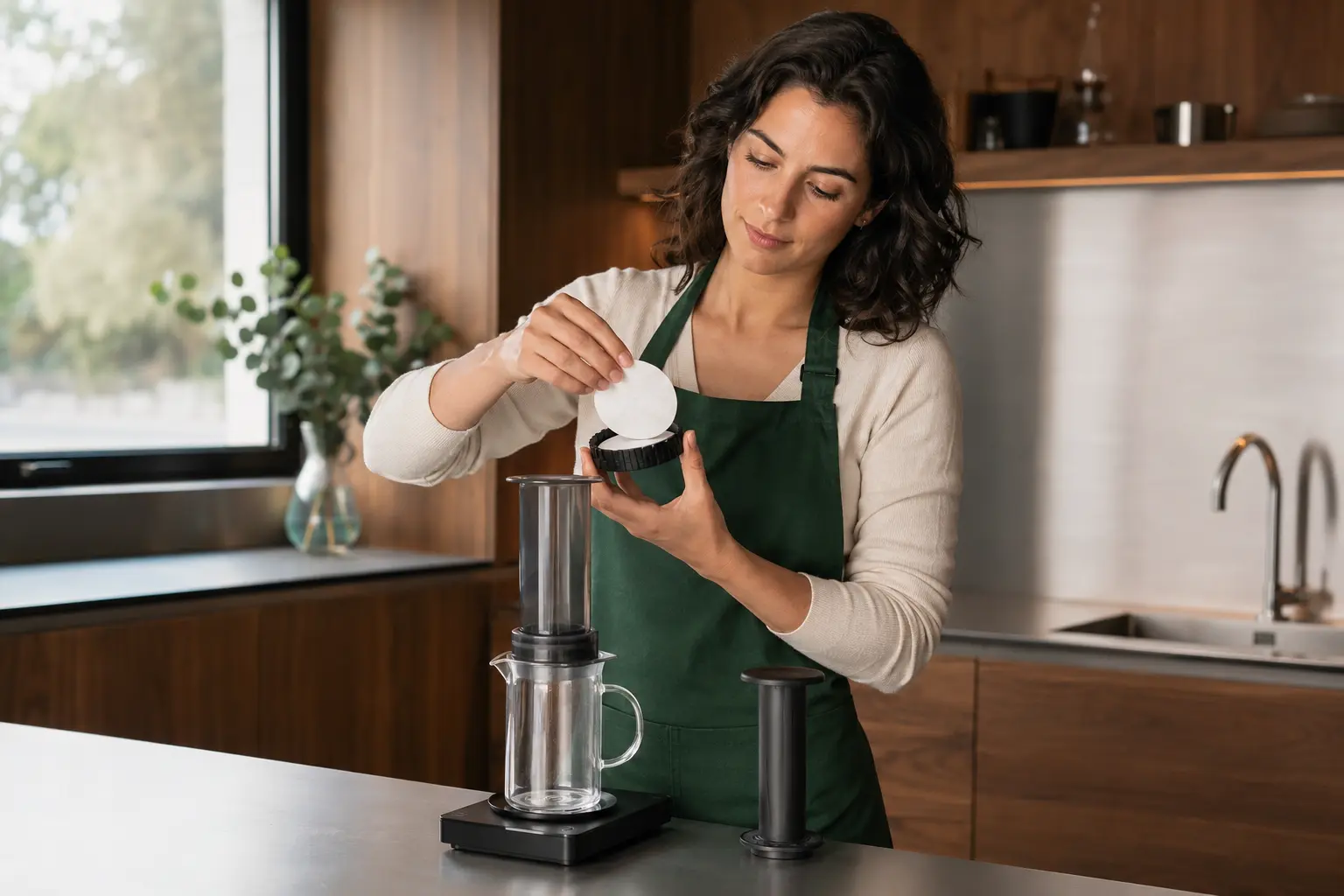
2. George Stanica's 2024 layered bypass
George Stanica of Romania won in 2024 with a washed Ethiopian coffee from Arsosala in Guji. His inverted recipe used 18g coffee, two 50g pours at 96°C and a long, gentle press. He then added warm water and room-temperature water to finish the drink at roughly 150 to 165g.
Pour the first 50g over five seconds and rest until 0:30. Add another 50g. Stir lightly for ten seconds. At 1:20, fit the cap and push out excess air. Swirl, flip and begin pressing at about 1:35. Add warm water until the drink reaches 130 to 135g, then add 20 to 30g room-temperature water.
Hot brewing water and a cooler are not opposites. The brew water supports extraction. The later additions set cup strength and bring the drink closer to a comfortable tasting temperature.
- Coffee: 18g, coarse
- Brewing water: 100g at 96°C in two pours
- Finished drink: about 150 to 165g
- Add bypass in small measured steps and stop when the flavours open up
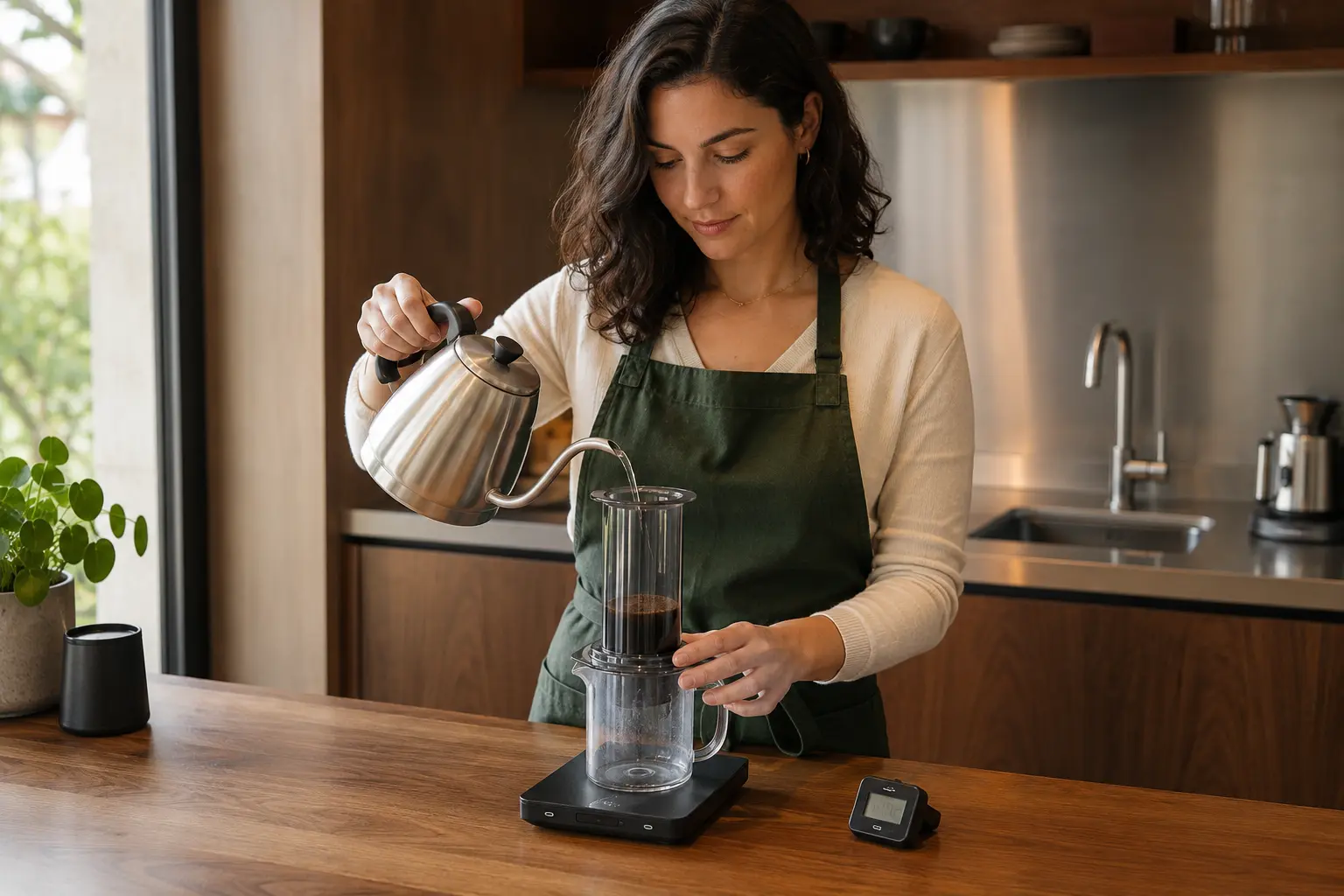
3. Tay Wipvasutt's 2023 split-dose recipe
Thailand's Tay Wipvasutt won in 2023 with a washed Kenyan coffee from Karindundu in Nyeri. The unusual move was a split dose: 16g entered the brewer at the beginning and another 2g was added partway through.
Brew 16g coffee with 100g water at 89°C. At 0:30, stir for five seconds. Add the remaining 2g dry coffee at 0:45, then stir again briefly at 0:55 before pressing and adjusting the concentrate for service.
The late dose is a flavour-shaping move for one coffee, not a universal extraction trick. Test it properly: brew once with all 18g at the start, then repeat with the split dose and compare aroma, clarity and finish.
4. Wendelien van Bunnik's 2019 high-dose concentrate
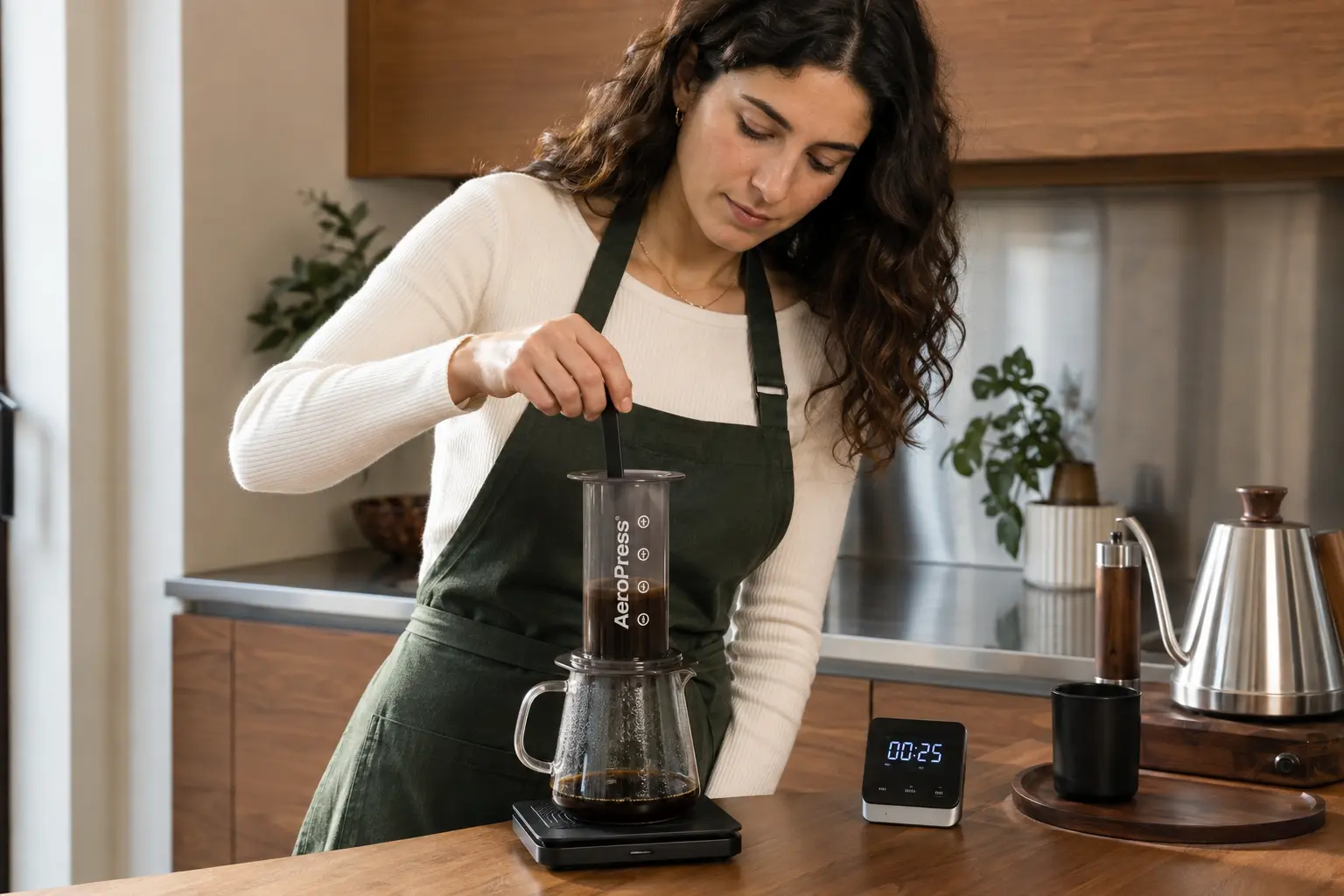
Wendelien van Bunnik of the Netherlands won in 2019 with a competition style built around a large 30g dose, 100g brewing water at 92°C and 120g bypass water.
Add 100g water to the inverted brewer within ten seconds and stir firmly twenty times. Fit the cap and press out excess air. At 0:40, flip the AeroPress onto the server. At 1:00, press for about twenty seconds, then add 120g hot water to the concentrate.
High-dose recipes can make a vivid aromatic cup, but they are expensive and less forgiving. For a practical home version, try 20g coffee, 100g brewing water and 80 to 100g bypass water.
5. Jeff Verellen's simple 2013 champion recipe
Jeff Verellen of Belgium won in 2013 with a method that looks almost modest beside modern competition routines: 18.3g coffee, 250g water at 85°C, a coarse grind and the normal upright position.
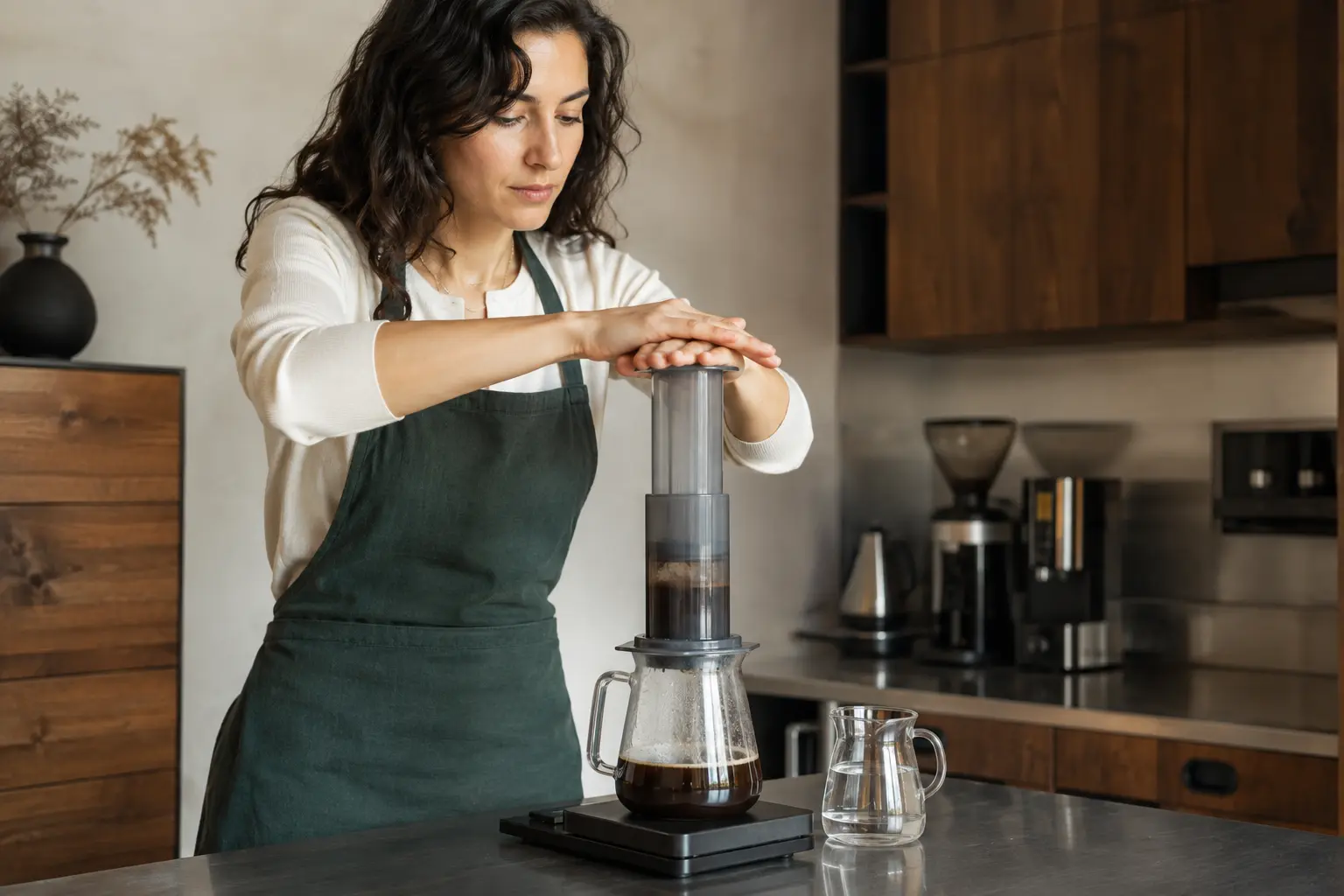
Wet the filter, add the coffee and pour about 40g water. Wait around 30 seconds, add the remaining water and press gently. Stop before forcing the plunger all the way down.
This is the best starting point in the group if you want a clean, repeatable cup without preparing multiple waters. Round the dose to 18g. If a very light roast tastes sharp, try hotter water before changing several variables at once.
What the winners have in common
The recipes disagree on almost every headline number, but the habits repeat. Each competitor brews for a specific coffee, controls , treats dilution as part of the recipe and manages serving temperature deliberately.
Bypass water is not a correction for a failed brew. In a concentrate recipe, it is part of the design. Add it by weight, taste after small additions and record the final beverage weight.
Championship recipes are evidence of possibility. The smartest way to use them is to borrow one idea at a time: a short concentrate, a measured bypass, a controlled stir, a slower press or a cooler serving temperature.
The recipe sheets also reveal how seriously competitors treat small actions. Stirring is counted, timed or patterned. Presses are described as gentle. Water is separated by temperature and purpose. Those details are not theatre. They reduce the number of uncontrolled changes between practice rounds and make the final cup easier to reproduce.
Serving temperature is managed with the same care. Several recent competitors add room-temperature water or swirl the server before presenting the drink. A coffee can be extracted with hot water and served at a gentler temperature. The first choice affects what dissolves from the grounds. The second affects how comfortably the judges can smell and taste it.
How to adapt a winning recipe to your coffee
Begin by identifying the structure. Is it a full-volume brew, where most of the final drink passes through the grounds, or a concentrate followed by bypass water? Does it depend on a special cap, multiple filters, particle sifting or competition water? Separate the central idea from the equipment used to execute it.
Next, look at the coffee. A very light, dense may need more heat or a finer grind than a developed blend. A coffee with many fine particles may slow the press and taste drier under heavy agitation. The winner's grinder setting cannot solve this for you because grinder scales differ. Translate the setting into a visible texture, make one cup and use taste to decide the next move.
If the cup tastes sharp, hollow or salty, extraction may be too low. Change one useful variable: grind finer, increase water temperature, extend contact time or add one controlled stir. If it tastes rough, drying or muddled, grind coarser, stir less, press more gently or shorten the brew. If flavour is good but the drink is simply too intense, add bypass water in 5g steps. Strength and extraction are related, but they are not the same problem.
Keep your first home version practical. Sifting coffee and preparing two precisely mineralised waters can be interesting, but they are not required to learn from the recipe. A normal paper filter, clean drinking water, a repeatable grind and an honest tasting note will teach you more than an elaborate routine you cannot reproduce tomorrow.
- Change grind or contact time when extraction is the problem.
- Change bypass water when the flavour is clear but the cup is too strong.
- Change one variable per brew so you know what caused the difference.
- Write down the final beverage weight, not only the water you poured into the brewer.
Full-volume brew or concentrate?
A full-volume recipe is usually the easier daily choice. The water that becomes the drink spends time with the coffee, and the finished weight is close to the amount poured into the brewer. Jeff Verellen's 2013 method belongs to this family. It asks for one water temperature, one main pour and a gentle press, so it is easier to repeat before work or share with someone new to AeroPress.
A concentrate recipe gives you another control after extraction. You brew a small, strong liquid, then add measured bypass water until the strength and serving temperature feel right. This can make aromatic coffees exciting and lets you tune two cups from the same concentrate differently. It can also hide a weak extraction if you treat dilution as the only adjustment. Taste the concentrate, taste after the first water addition and record where the cup becomes clear rather than watery.
Neither structure is more advanced in a way that guarantees better flavour. Choose the full-volume route when you want simplicity and repeatability. Choose a concentrate when you want to explore bypass, cooling and a shorter extraction. The useful winner is the one you can brew again and improve.
The Atlas three-brew test
Choose one light or light-medium coffee and brew it three times. First, use the simple 2013 structure: 18g coffee, 250g water, upright brewer and a gentle press. Second, try a modern concentrate with 18g coffee and 100g brewing water, then dilute the result to 160 to 170g.
For brew three, repeat the better of the first two cups and change only one variable: grind, temperature, agitation, contact time or final dilution. Write down the coffee, roast date, grinder setting, water temperature, final beverage weight and what changed in the cup.
That third brew is where a famous recipe stops being trivia and starts becoming yours.
Take it from the article to the cup
Build the recipe, brew it once, then make it yours.
Start with the championship structure in Guided Brew. Save the result to My Coffee Lab, where you can edit the recipe, repeat it and compare the next cup.