Lesson 06 · From origin to roast
Altitude matters, but it is not a quality score
Elevation changes the growing environment. It does not make every high-grown coffee better than every lower-grown one.
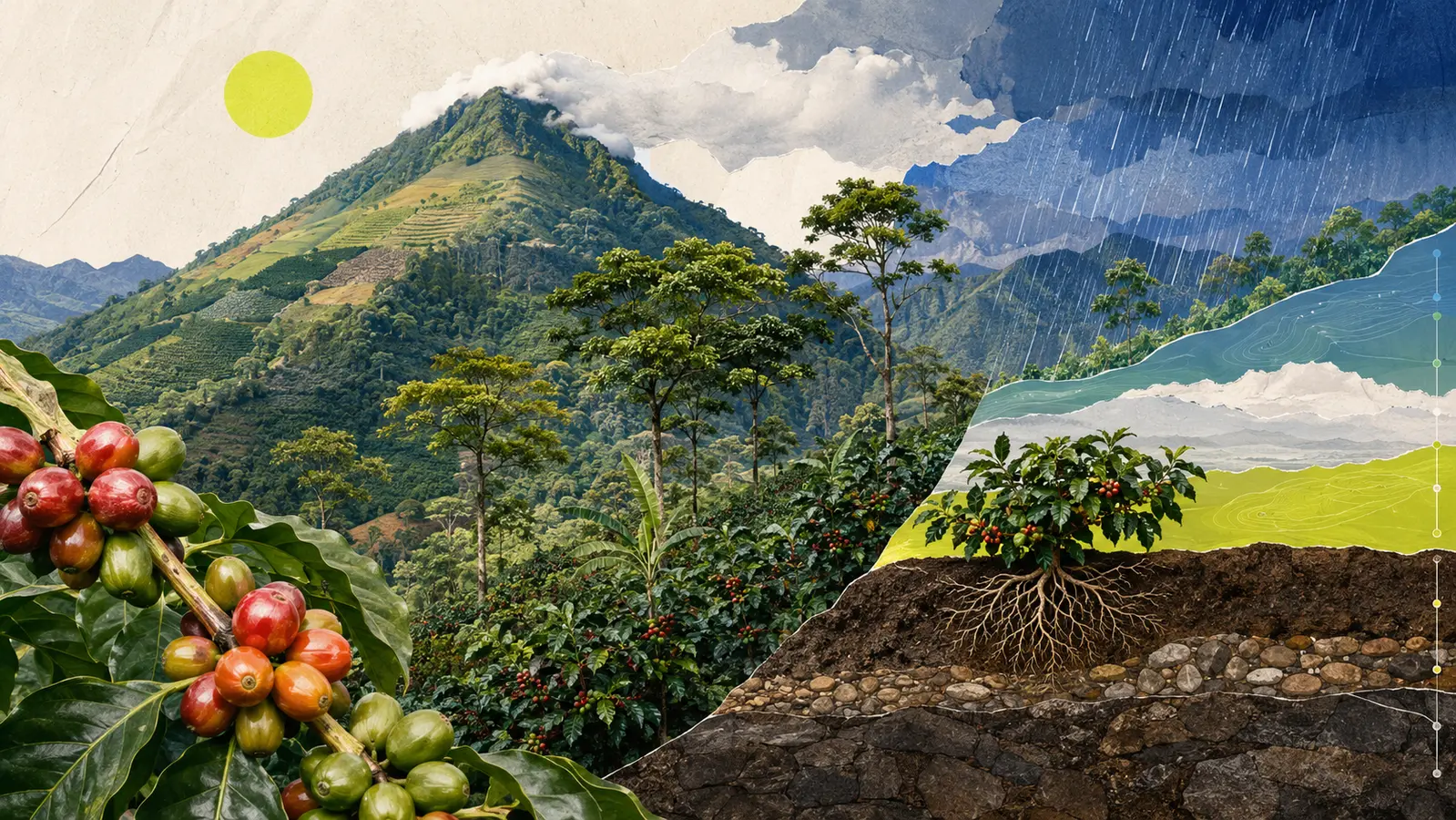
Altitude is a proxy for several conditions
Higher elevations are often cooler. Cooler conditions can slow cherry development, which may support dense seeds and complex flavour when the and farm system are suited to them. But elevation also changes rainfall, wind, sunlight, disease pressure and the practical difficulty of farming.
The same number means different things at different latitudes. A farm at 1,400 metres near the equator does not share an identical climate with a farm at 1,400 metres much farther north or south. A bag that lists altitude gives a clue, not a complete environmental record.
Terroir is a network, not a magic ingredient
Soil structure, nutrient management, shade trees, slope, water availability, daily temperature range and surrounding ecology all influence plant health and fruit development. The variety has its own needs and tolerances. Producers then make decisions about pruning, harvest timing and cherry selection.
Two neighbouring farms can produce different coffee, and one farm can produce different lots across seasons. Processing and drying add another layer after harvest. This is why Atlas never invents a brew recipe from country or altitude alone.
Use altitude honestly
When a credible producer or roaster publishes an elevation range, Atlas records it as provenance. If it is missing, we say so. A broad regional elevation copied from the internet is not evidence for one lot.
As a drinker, compare altitude only after checking origin, variety, process, roast and freshness. If a high-grown coffee tastes thin, it may need a finer grind or better ; the elevation printed on the bag cannot rescue the brew.
Next · lesson 07
Washed, natural and honey, without the myths
Process changes the route from fruit to seed; it does not prescribe one flavour.
Next lesson