Atlas Counterpoint · Coffee culture and service
Your coffee is too cold. The barista says it is “SCA standard.” Who is right?
A coffee drinker wants a hotter cup. A barista wants to protect flavour. The useful answer begins by separating brewing temperature, serving temperature and personal preference.
The cup arrives
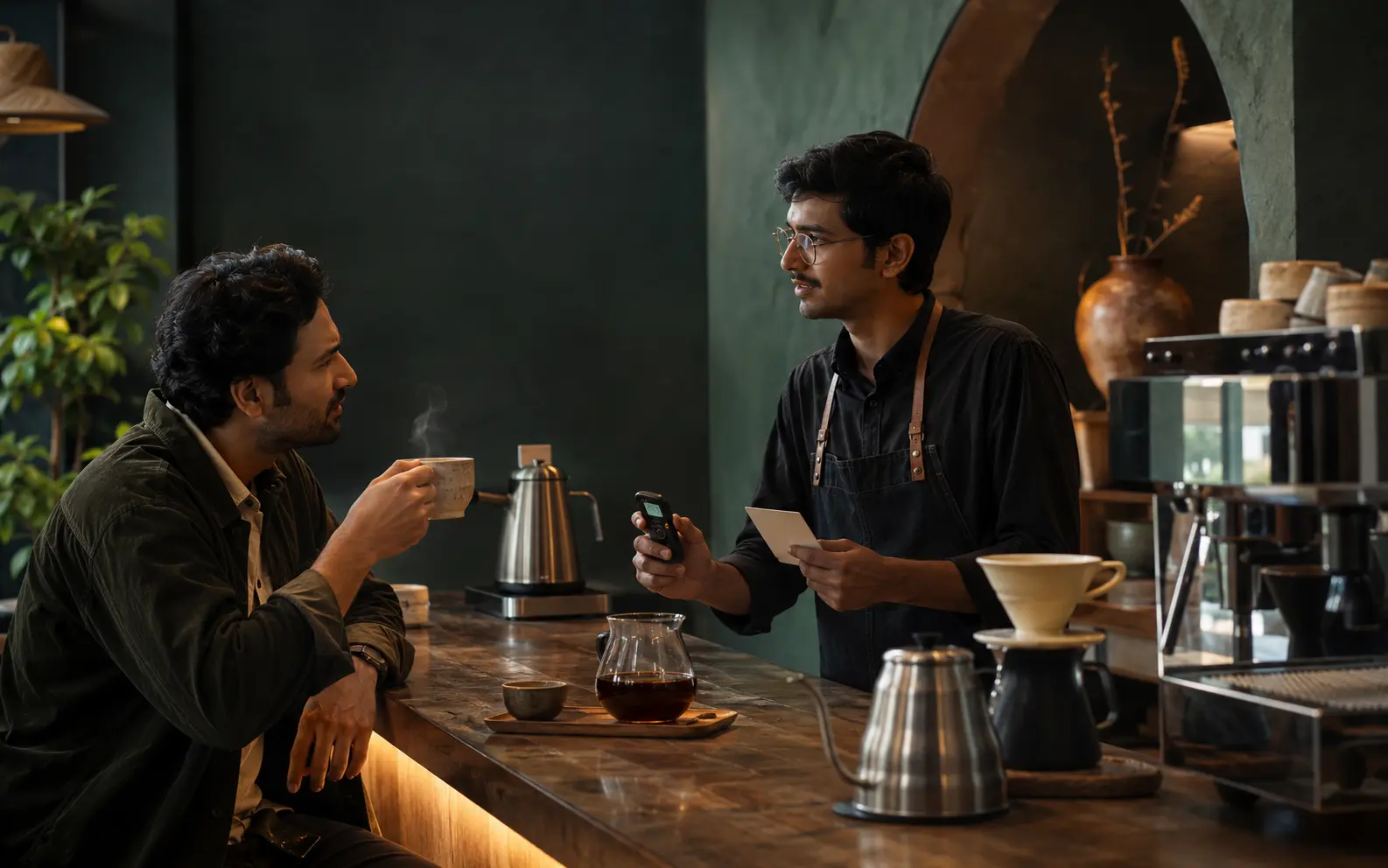
The guest lifts a flat white, takes a sip and pauses. “This is barely hot.”
The barista answers, “We serve it at the standard. If it is hotter, you will not taste the coffee properly.”
The guest looks unconvinced. “I know how I like my coffee. I asked for it hot.”
This exchange happens in cafés around the world. Both people may be protecting something real. The barista cares about flavour, milk texture and a carefully prepared recipe. The guest cares about enjoyment, value and the simple expectation that a hot drink should feel hot. The problem begins when a technical claim is used to close the conversation instead of helping the guest.
The barista has a point
Coffee does not taste identical at every temperature. Heat changes what we can smell and how we perceive sweetness, , bitterness and flavour detail. Very hot liquid can make it difficult to notice delicate aromas immediately. As the cup cools, some coffees become easier to read. A bright may reveal fruit and floral character that was harder to notice in the first sip.
Milk also has limits. A barista textures milk to create a smooth mixture of liquid and tiny bubbles. Excessive heating can make milk taste cooked, reduce perceived sweetness and damage the texture the barista worked to create. A café may therefore design a milk-drink recipe around a target range that balances heat, texture and flavour.
So the barista's underlying idea is reasonable: more heat is not always more flavour, and a drink can improve as it cools. A café should be able to explain why its recipe has a target temperature.
The guest has a point too
A drink is not a laboratory sample. It is made for a person. Some people associate warmth with comfort, expect a drink to stay hot during a long conversation or simply enjoy coffee at a higher temperature. A preference can be informed by culture, habit, weather, cup size and how quickly someone drinks.
Research on black coffee found that consumer acceptance was highest across a range of approximately 58–66°C. In the same study, 68–70°C was the lowest range in which no participant described the coffee as too cold, although some people then found it too hot. This does not create a new universal rule. It demonstrates the opposite: people do not agree on one perfect drinking temperature.
A guest who asks for a hotter cup is not rejecting . They are describing the experience they want. The café can explain trade-offs, but it should not use expertise to tell the person that their own preference is invalid.
What “SCA standard” actually means
The Specialty Coffee Association publishes standards and technical resources for areas such as equipment performance, coffee preparation, evaluation and professional practice. These documents help people measure consistently and compare like with like.
A is the temperature of the water used to material from ground coffee. It is not automatically the same as the in the cup. In one SCA-supported brewing study, researchers compared water at 87, 90 and 93°C. Those numbers describe brewing conditions, not a command that every customer must drink at a fixed temperature.
is also easy to misuse in this debate. It is a controlled method designed to compare coffees under consistent conditions. Tasters assess a sample as it changes temperature because different characteristics become noticeable over time. A café visit has a different purpose. The guest is not required to perform an evaluation before enjoying the drink.
Saying “the SCA standard” without naming the document, measurement and purpose collapses several different ideas into one authoritative phrase. There may be a café recipe, an equipment standard or a training convention behind the barista's decision. None of those creates a universal law that overrides a guest's stated preference.
- Brewing temperature: the water temperature used during extraction.
- Serving temperature: the temperature of the drink when it reaches the guest.
- Drinking preference: the temperature at which that person enjoys it.
- Sensory evaluation: a controlled method for observing a coffee, not a rule for hospitality.
A better answer at the counter
The strongest response is neither defensive nor vague. The barista could say: “We normally serve this drink warm enough to keep the milk sweet and the coffee clear. I can make yours hotter. Would you like it just a little hotter, or very hot?”
That answer keeps the useful expertise and returns the decision to the guest. If a milk drink is requested very hot, the barista can explain that the texture may be thinner or the milk may taste more cooked. If the guest still prefers it, the café can make an informed service choice.
Small operational details matter too. A cold ceramic cup, slow handoff or long walk to the table can turn a correct recipe into a disappointing drink. Preheating the cup, serving promptly and checking the actual beverage temperature can solve the complaint without changing the recipe. Repeated complaints should be recorded by drink, cup size, service time and branch so the café can identify a pattern instead of blaming individual taste.
- Ask what “hot” means to the guest before remaking the drink.
- Check whether the cup, server or delay is stealing heat.
- Explain one relevant trade-off in plain language.
- Remake the drink when the experience has clearly missed the guest's request.
Standards should improve hospitality
Standards are valuable when they create a dependable starting point. They help a team reproduce recipes, diagnose equipment and communicate measurements. They become less useful when they are treated as status or used to win an argument.
A good specialty café combines precision with curiosity. It can protect the coffee's character and still ask what the person in front of the bar enjoys. The barista is not merely operating equipment; the barista is translating coffee knowledge into a better experience.
The guest does not have to surrender preference to prove they understand coffee. The barista does not have to abandon technique to be hospitable. The skill is to explain the recipe, identify the real temperature problem and offer a choice.
The Atlas verdict
The barista is right that temperature changes flavour and that excessive heat can damage a carefully prepared milk drink. The guest is right that the final drink must still suit the person who ordered it.
The phrase “SCA standard” is not a winning argument. Ask which standard, what it measures and why it applies. Then return to the practical question: can the café serve this guest a hotter drink while being honest about the trade-off?
In specialty coffee, authority should make service clearer. It should never make the guest feel foolish for knowing how they like their cup.
Continue learning · start at lesson 01
What specialty coffee actually means
Quality is more than a score, and a beautiful café is not evidence.
Begin the course