Lesson 01 · Start here
What specialty coffee actually means
Quality is more than a score, and a beautiful café is not evidence.
There is no single magic badge
is often reduced to “ scoring 80 points or more.” That shorthand came from green-coffee evaluation and remains familiar in trade, but it cannot tell you everything a drinker needs to know. A score describes an evaluation under particular conditions. It does not guarantee that a retail bag is fresh, that the roast suits your method or that a café prepared it well.
The increasingly describes value through several lenses: physical assessment, sensory description, personal appreciation and information such as provenance. Keeping these lenses separate makes the record more honest. A coffee can be technically clean but not suit your taste; you can love a simple blend without pretending it is a rare microlot.
Specialty is a chain of decisions
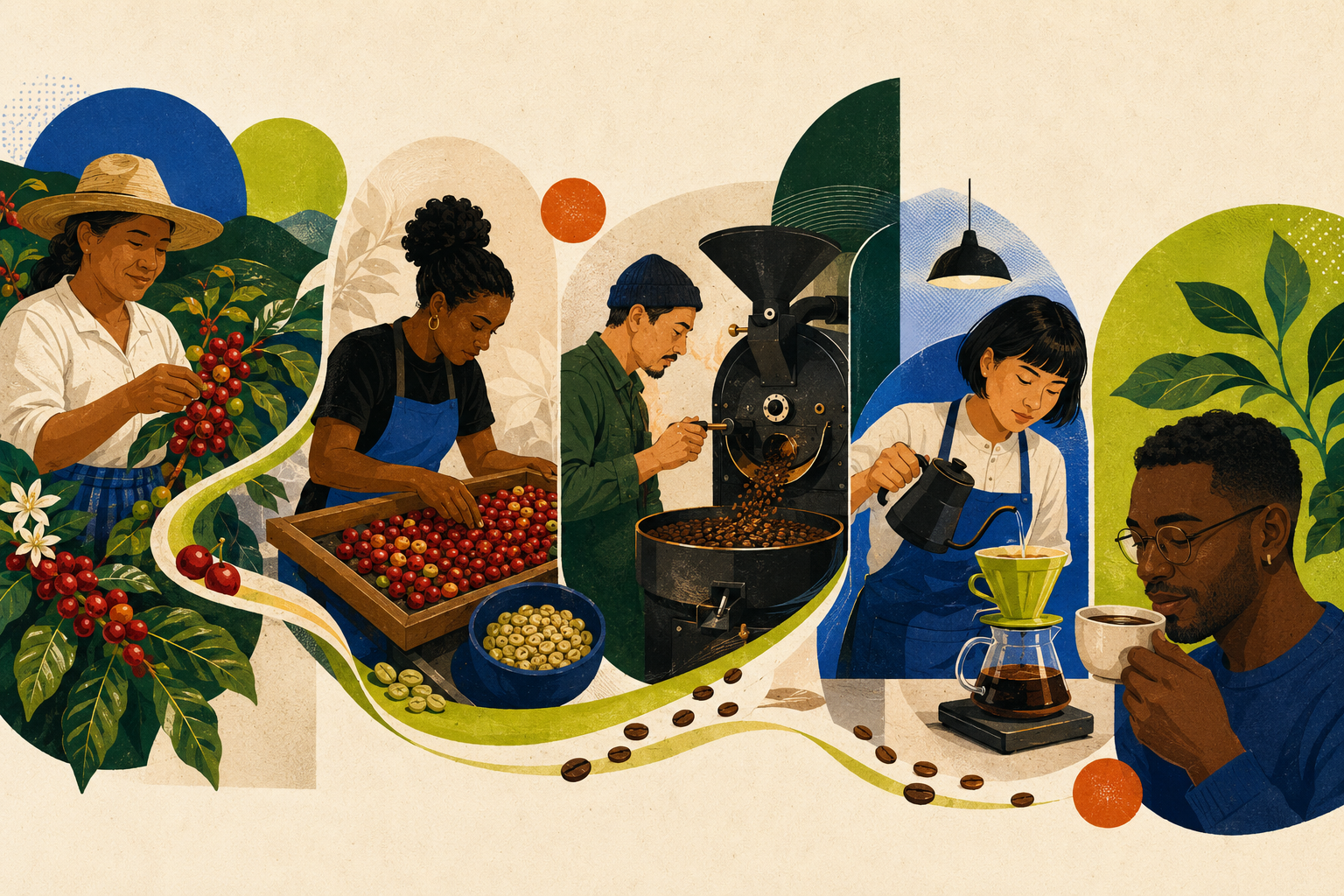
Quality can be protected at every stage: plant selection, farm care, ripeness, sorting, , drying, storage, export, roasting, packaging, grinding, water and brewing. It can also be damaged at any of those stages. That is why a trustworthy specialty claim should point to practices and information rather than rely on price or aesthetics.
Traceability does not have to mean publishing a farmer’s life story on every bag. It means identifying what is known, naming the source of that information and refusing to fill gaps with marketing. “Region not published” is more credible than an invented region.
The café still has to execute
A café may buy excellent coffee and serve an unbalanced cup. Grinder calibration, recipe, water, machine cleanliness, milk handling and staff training all matter. Conversely, skilled baristas can make a modest, transparent blend taste excellent. Atlas therefore separates the coffee record from the café branch and from an individual user’s cup log.
We look for specialty practice at the branch: traceable coffee, capable preparation, an accurate menu and evidence that is current enough to help a visitor. Qualification is curated. Owner participation improves data, but payment cannot buy the label.
How to use the word as a drinker
Use “specialty” as an invitation to ask better questions. Who roasted the coffee? Is the origin known? When was it roasted? Which method is it being served with? Can the café explain the recipe? None of these questions requires you to perform expertise. A good specialty business should make the answer clearer, not make you feel small.
Then decide what you enjoy. Quality and preference overlap, but they are not identical. Atlas gives you structured evidence and a place to remember your own experience; it does not replace your taste.
Next · lesson 02
Coffee is a fruit before it is a drink
Follow one coffee seed from a flowering tree to the cup, and see where quality can be protected or lost along the way.
Next lesson