Lesson 05 · From origin to roast
Species, varieties and why coffee names multiply
Arabica and robusta are species. Bourbon, Typica and Gesha are varieties. None is a shortcut to the taste in your cup.
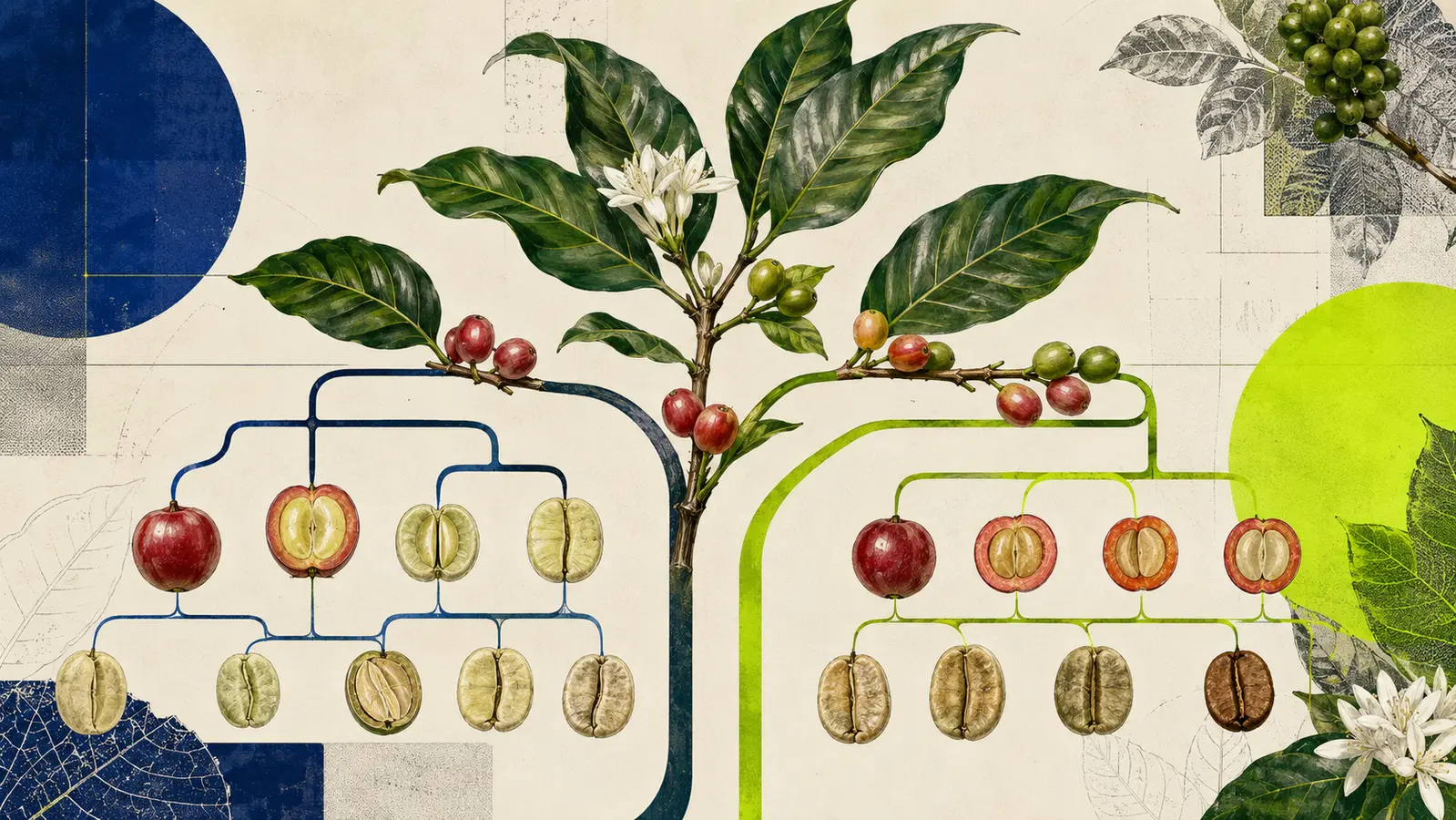
Begin with species
More than one Coffea species exists, but the two in wide commercial cultivation are and . Canephora is commonly called robusta, although robusta is not the full story of its diversity. Arabica generally has less genetic diversity than canephora and is often more vulnerable to pests, disease and heat.
Species does not set a permanent quality ceiling. Poorly handled arabica can taste defective; carefully selected and processed canephora can be sweet and complex. The useful question is not whether one word sounds prestigious, but what plant material was grown, how it was handled and how the cup performs.
A variety is a genetic line inside a species
Typica, Bourbon, Caturra, SL28 and Gesha are examples of arabica or cultivated groups. Some arose through natural mutation or movement across regions; others were selected or bred for yield, plant size, disease resistance, climate resilience or cup potential. The name can help a producer choose a suitable plant and help a buyer understand the lot.
Variety names are not flavour recipes. Bourbon may be associated with high cup quality under suitable conditions, while a resistant hybrid may combine resilience with excellent sensory potential. Soil, shade, nutrition, cherry ripeness, processing, drying and roast can easily outweigh the expectation created by the variety name.
Read the name with evidence
A bag may list one variety, a field blend or a local landrace group. Spellings and naming traditions differ by country. DNA testing can resolve some identities, but many commercial records rely on farm knowledge and supply-chain documents. Atlas preserves the level of certainty instead of silently turning a broad local label into a precise genetic claim.
Use variety as one comparison point in My Coffee Lab. If you repeatedly enjoy a variety across several producers and roasters, that pattern becomes personally useful. One extraordinary cup is a reason to explore, not proof that every coffee carrying the name will taste the same.
Next · lesson 06
Altitude matters, but it is not a quality score
Elevation changes the growing environment. It does not make every high-grown coffee better than every lower-grown one.
Next lesson