Lesson 09 · From origin to roast
Freshness, degassing and when to open the bag
Roast date starts a changing window. It is not a race to brew the coffee the same afternoon.
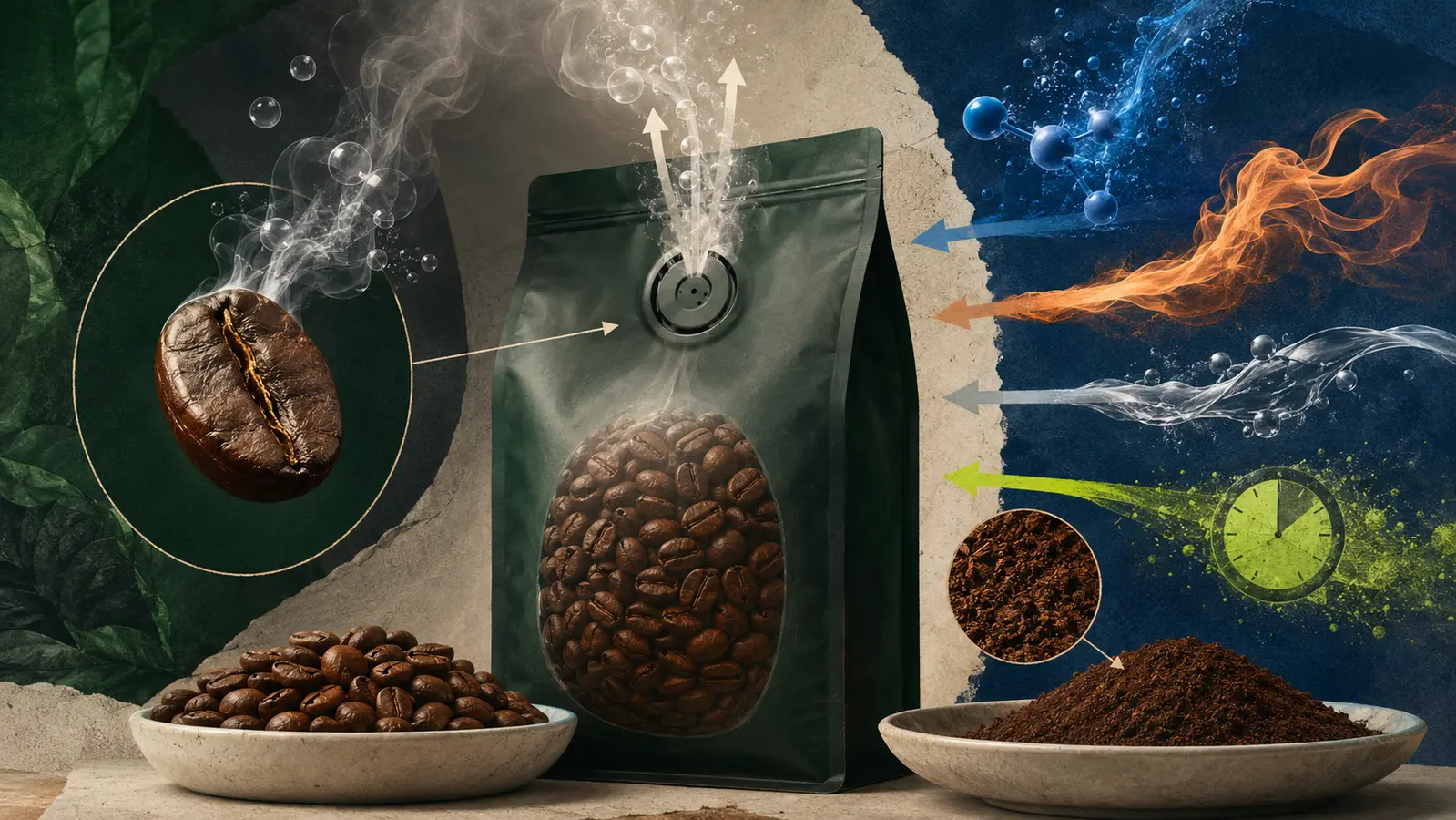
Coffee changes immediately after roasting
Roasting creates gases, especially carbon dioxide, inside the porous seed. They escape rapidly at first and then more slowly. A one-way valve lets pressure leave a sealed bag without deliberately allowing outside air to flow back in.
During brewing, abundant gas can resist wetting and disturb water flow. This is visible as in filter coffee and can make very fresh espresso unstable. Resting is therefore not neglect; it can be part of preparing the coffee to brew predictably.
There is no universal best day
Roast degree, bean density, packaging, intended brew method and storage all change the useful window. Espresso often benefits from more rest than or filter brewing because gas disrupts a pressurised puck. Some light roasts open slowly; some darker roasts taste ready sooner.
Use the roaster’s guidance when it exists, then observe. If the bloom is violent, espresso runs unpredictably or aroma seems closed, wait and try again. If flavour is fading and the grind must move much finer, staling may be taking over.
Protect the window you have
Oxygen, moisture, heat and time all reduce freshness. Keep the bag sealed in a cool, dry cupboard and squeeze out excess air without crushing the valve. Grind only the dose you need; ground coffee exposes far more surface area.
For a large bag, divide and freeze airtight portions. Let a sealed portion warm before opening so humidity does not condense on cold beans. Record the roast date and brew dates in My Coffee Lab so “fresh” becomes something you can taste and compare.
Next · lesson 10
Ratio, strength and extraction are different
A stronger cup is not automatically a better-extracted cup.
Next lesson